
-
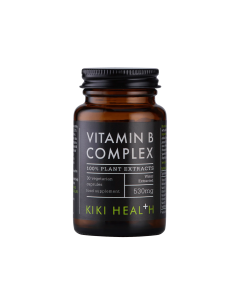 Kiki Health - Vitamin B Complex - 30 vcaps - CLEAROUTNiet op voorraadSpeciale prijs € 24,95 € 30,95
Taal
Plent België
 Vandaag verzonden
- Gratis verzending vanaf € 45,-
- Afterpay mogelijk
- Klantbeoordeling 9.3
- Vandaag verzonden
- Gratis verzending vanaf € 45,-
- Afterpay mogelijk
- Sparen voor korting
- Klantbeoordeling 9.3
Onze verbeterde winkelervaring is live! Ga nu naar Plenthera.com:

Onze verbeterde winkelervaring is live! Ga nu naar Plenthera.com:
- Home
- Vitamines & supplementen
- Vitamines
- Vitamine B
- Vitamine B-complex
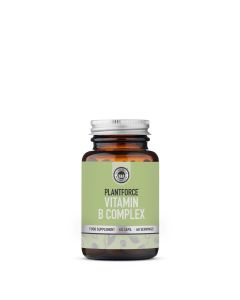
Vitamine B-complex
Wat is een vitamine B-complex?
Vitamine-B-complexsupplementen zijn supplementen die het volledige assortiment B-vitamines bevatten (B1, B2, B3, B5, B6, B7, B9 en B12). Wist niet dat er meer dan één waren? Maak je geen zorgen, veel mensen zijn verbaasd als ze deze informatie horen. Maar er is in feite een grote groep hiervan, en ze zijn allemaal betrokken bij het vergemakkelijken van het vrijkomen van energie uit ons voedsel.
B-vitamines zijn een klasse van in water oplosbare vitamines, wat simpelweg betekent dat ze in water kunnen worden vervoerd. Ze zijn cruciaal voor een groot aantal biologische functies, zoals energieproductie, ondersteuning van het immuunsysteem en zenuwfunctie, om er maar een paar te noemen.
Belangrijkste gezondheidsaspecten van de B-vitamines
Het is onmogelijk om een aantal belangrijke aspecten van de B-vitamines als groep te generaliseren, omdat ze elk verschillende rollen spelen. Dus laten we ze in plaats daarvan wat nader bekijken. De volgende informatie is aangepast van The National Health Institute (Bron: NIH.uk ) en Examine (bron: Examine.com ).
Vitamine B1 (thiamine)
Thiamine komt voor in noten, peulvruchten, verrijkte granen en erwten. Het functioneert bij het vrijkomen van energie uit ons voedsel en ondersteunt de zenuwfunctie en de gezondheid van het zenuwstelsel.
Vitamine B2 (riboflavine)
Deze vitamine kan worden gewonnen uit dagboek, zoals melk, yoghurt, kaas, maar ook uit verrijkte granen en paddenstoelen. Het is essentieel voor het onderhoud van huid, ogen en ook voor het vrijkomen van energie uit onze voeding.
Vitamine B3 (niacine)
Niacine is zo fijn! Grapje, maar eigenlijk kan niacine belangrijk zijn voor het reguleren van de stemming en de cognitieve functie. Dat zijn echter meer verkennende wegen in het onderzoek, en niacine staat meer bekend om zijn rol bij het vergemakkelijken van de afgifte van energie uit voedsel. U kunt niacine consumeren in dierlijk voedsel zoals vlees, zuivelproducten of eieren.
Vitamin B5 (Panthothenic acid)
Again, this B-vitamin is also an important cofactor in a series of enzymatic reactions. In this way, it aids the extraction of energy from food and putting it to use throughout the day. Foods rich in vitamin B5 include animal meats and dairy
Vitamin B6 (Pyridoxine)
This B-vitamin is found in many foods including poultry, pork, fish, oats, bananas and fortified grains.
Vitamin B7 (Biotin)
Biotin is a B-vitamin that is needed in much smaller amounts than the others. It is important for the production of fatty acids by the bacteria in the digestive tract.
Vitamin B9 (Folate)
This is one of the most important B-vitamins, especially for pregnant women. There are two forms, folate (the natural food form) and folic acid (the synthetic form). Despite what you may think, it is actually the synthetic form that is much more bioavailable in the body. Folate is crucial for the formation of red blood cells, and for healthy neural tube formation in the fetus.
The best sources of folate (natural form) are dark, green vegetables such as spinach, kale, broccoli and Brussel sprouts. It can also be sourced from fortified foods such as cereals and other grains.
Vitamin B12 (Cobalamin)
This is another biggie! Cobalamin is the last of the B-vitamins and is one that is often under-consumed in a variety of different groups. One of these groups is plant-based eaters. Because there is virtually no plant-based source of cobalamin, it can be extremely difficult to reach your daily needs, if vegan or vegetarian, without supplementing.
Vitamin B12 (Cobalamin) can be found in animal foods such as red meat, poultry, dairy, and eggs. It is crucial for healthy nerve function, energy production, and the formation of haemoglobin.